Golden Oyster Liquid Culture

$15.00

Golden Oyster

Pleurotus citrinopileatus

Overview

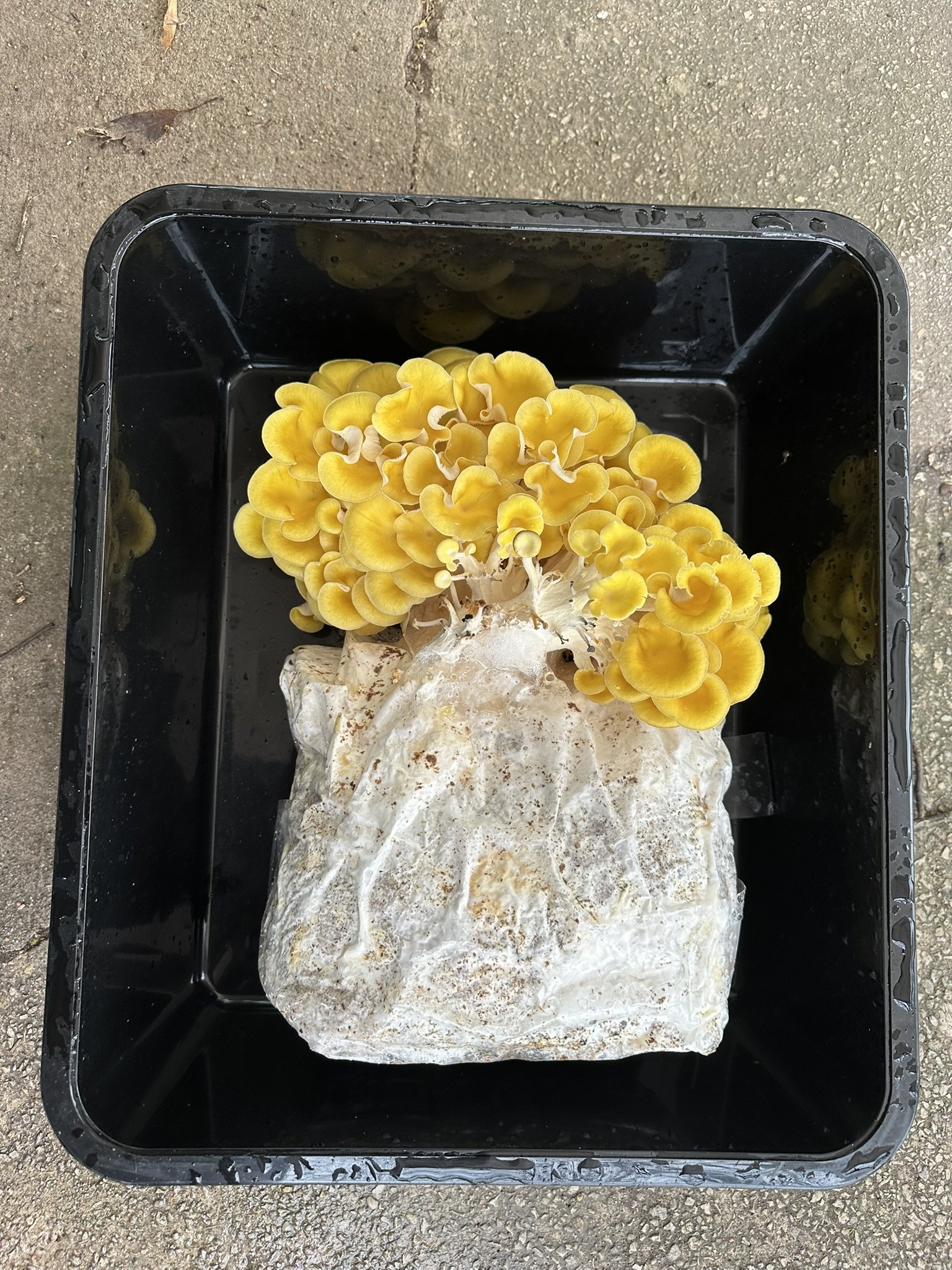
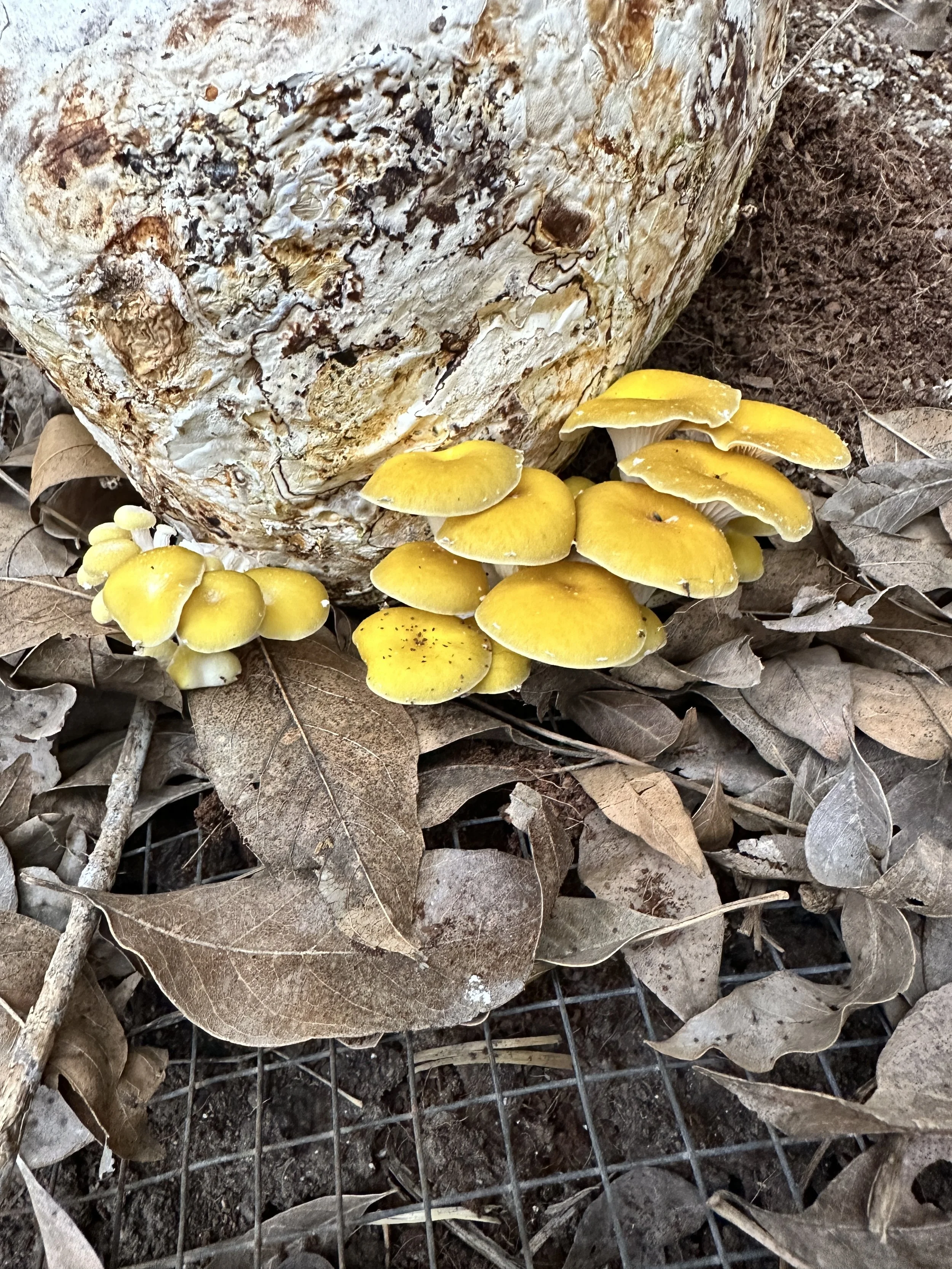
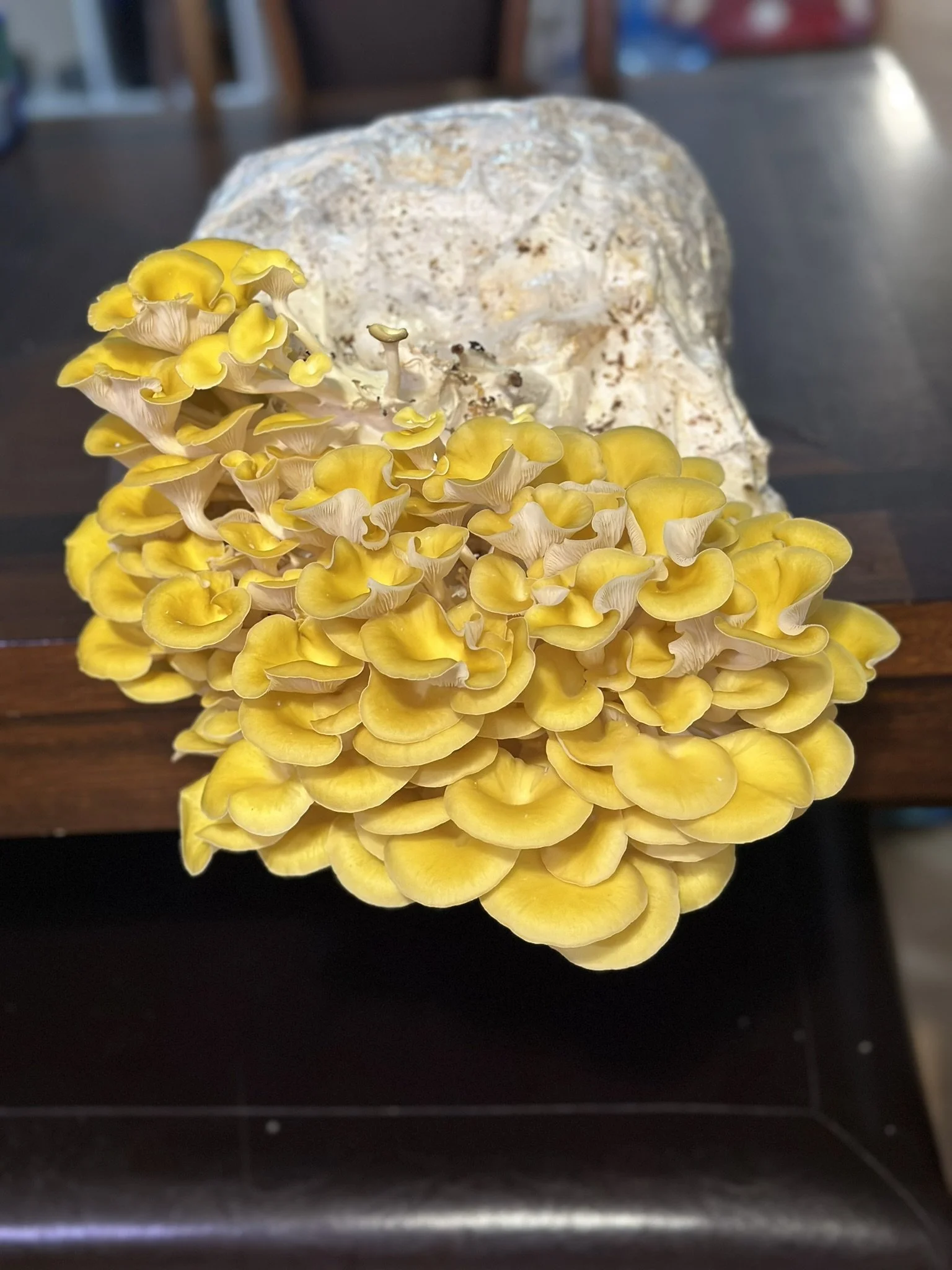
Golden Oyster (Pleurotus citrinopileatus), also known as Yellow Oyster, produces bright golden clusters and is one of the most visually striking oyster species.

This is a fast-growing, warm-weather oyster that performs well in higher temperatures, making it a solid option for growers in southern climates.

Compared to pink oysters, golden oysters are more delicate and fragile, both during growth and handling, and require a bit more attention to harvest timing.

Difficulty: Beginner
Growth Speed: Fast
Best Season: Spring and Summer

Ideal Growing Conditions

Colonization Temperature: 75–85°F
Fruiting Temperature: 70–85°F
Humidity: 85–95%
Fresh Air: High
Light: Indirect daylight or grow lights

Golden oysters prefer warm growing conditions but are slightly less heat tolerant than pink or Florida oysters.

Strong fresh air exchange is important. Limited airflow can cause long stems and small caps.

Best Substrates

Golden oysters grow well on a variety of lignin-rich substrates.

Common options include:

  • Hardwood sawdust or hardwood pellets

  • Straw

  • Agricultural byproducts

For fruiting blocks, the best results are typically achieved using Master’s Mix:

50% hardwood (oak recommended)
50% soy hulls

This supplemented substrate consistently produces larger flushes and stronger yields.

Spawn Ratio

Recommended spawn rate: 10–20%

Example:

1 lb grain spawn : 5–8 lbs substrate

Higher spawn rates improve colonization speed and reduce contamination risk.

Colonization

Typical colonization time: 10–14 days

Healthy mycelium should appear:

  • bright white

  • thick and vigorous

  • evenly spreading throughout the substrate

Fruiting

Pins typically appear within 3–5 days after introducing fresh air and humidity.

Clusters develop quickly and are usually ready to harvest 4–6 days after pin formation.

Golden oysters form dense cascading clusters of small caps.

Harvesting

Harvest clusters before caps flatten and before heavy spore release begins.

Golden oysters are more delicate than other oyster species and should be handled gently during harvest.

To harvest, twist and remove the entire cluster from the substrate block.

Typical Yield Expectations

Golden oysters can produce strong flushes when grown on properly prepared substrate.

A typical 5 lb fruiting block can produce:

1–2 pounds of fresh mushrooms across multiple flushes

The first flush is usually the largest.

Cooking and Flavor Notes

Golden oysters have a mild, slightly nutty flavor and tender texture.

They are excellent in:

  • stir fry

  • soups

  • pasta dishes

  • sautéed vegetables

They are best used fresh and typically last only 2–3 days in the refrigerator.

Warm Climate Performance

Golden oysters perform well in warm conditions but are slightly less tolerant of extreme heat than pink or Florida oysters.

They are a strong choice for spring and summer growing but may require more attention to humidity and harvest timing in hotter environments.

Grow with Texas Toadstools

Our Golden Oyster liquid culture is selected for fast growth and reliable performance in warm growing conditions.

If you want next, I can tighten one more page that would pair perfectly with this:

👉 “Best Mushrooms for Hot Climates (Texas Grower Guide)”

That page + this one = very strong traffic combo.

Golden Oyster

Pleurotus citrinopileatus

Overview

Golden Oyster (Pleurotus citrinopileatus), also known as Yellow Oyster, produces bright golden clusters and is one of the most visually striking oyster species.

This is a fast-growing, warm-weather oyster that performs well in higher temperatures, making it a solid option for growers in southern climates.

Compared to pink oysters, golden oysters are more delicate and fragile, both during growth and handling, and require a bit more attention to harvest timing.

Difficulty: Beginner
Growth Speed: Fast
Best Season: Spring and Summer

Ideal Growing Conditions

Colonization Temperature: 75–85°F
Fruiting Temperature: 70–85°F
Humidity: 85–95%
Fresh Air: High
Light: Indirect daylight or grow lights

Golden oysters prefer warm growing conditions but are slightly less heat tolerant than pink or Florida oysters.

Strong fresh air exchange is important. Limited airflow can cause long stems and small caps.

Best Substrates

Golden oysters grow well on a variety of lignin-rich substrates.

Common options include:

  • Hardwood sawdust or hardwood pellets

  • Straw

  • Agricultural byproducts

For fruiting blocks, the best results are typically achieved using Master’s Mix:

50% hardwood (oak recommended)
50% soy hulls

This supplemented substrate consistently produces larger flushes and stronger yields.

Spawn Ratio

Recommended spawn rate: 10–20%

Example:

1 lb grain spawn : 5–8 lbs substrate

Higher spawn rates improve colonization speed and reduce contamination risk.

Colonization

Typical colonization time: 10–14 days

Healthy mycelium should appear:

  • bright white

  • thick and vigorous

  • evenly spreading throughout the substrate

Fruiting

Pins typically appear within 3–5 days after introducing fresh air and humidity.

Clusters develop quickly and are usually ready to harvest 4–6 days after pin formation.

Golden oysters form dense cascading clusters of small caps.

Harvesting

Harvest clusters before caps flatten and before heavy spore release begins.

Golden oysters are more delicate than other oyster species and should be handled gently during harvest.

To harvest, twist and remove the entire cluster from the substrate block.

Typical Yield Expectations

Golden oysters can produce strong flushes when grown on properly prepared substrate.

A typical 5 lb fruiting block can produce:

1–2 pounds of fresh mushrooms across multiple flushes

The first flush is usually the largest.

Cooking and Flavor Notes

Golden oysters have a mild, slightly nutty flavor and tender texture.

They are excellent in:

  • stir fry

  • soups

  • pasta dishes

  • sautéed vegetables

They are best used fresh and typically last only 2–3 days in the refrigerator.

Warm Climate Performance

Golden oysters perform well in warm conditions but are slightly less tolerant of extreme heat than pink or Florida oysters.

They are a strong choice for spring and summer growing but may require more attention to humidity and harvest timing in hotter environments.

Grow with Texas Toadstools

Our Golden Oyster liquid culture is selected for fast growth and reliable performance in warm growing conditions.

If you want next, I can tighten one more page that would pair perfectly with this:

👉 “Best Mushrooms for Hot Climates (Texas Grower Guide)”

That page + this one = very strong traffic combo.